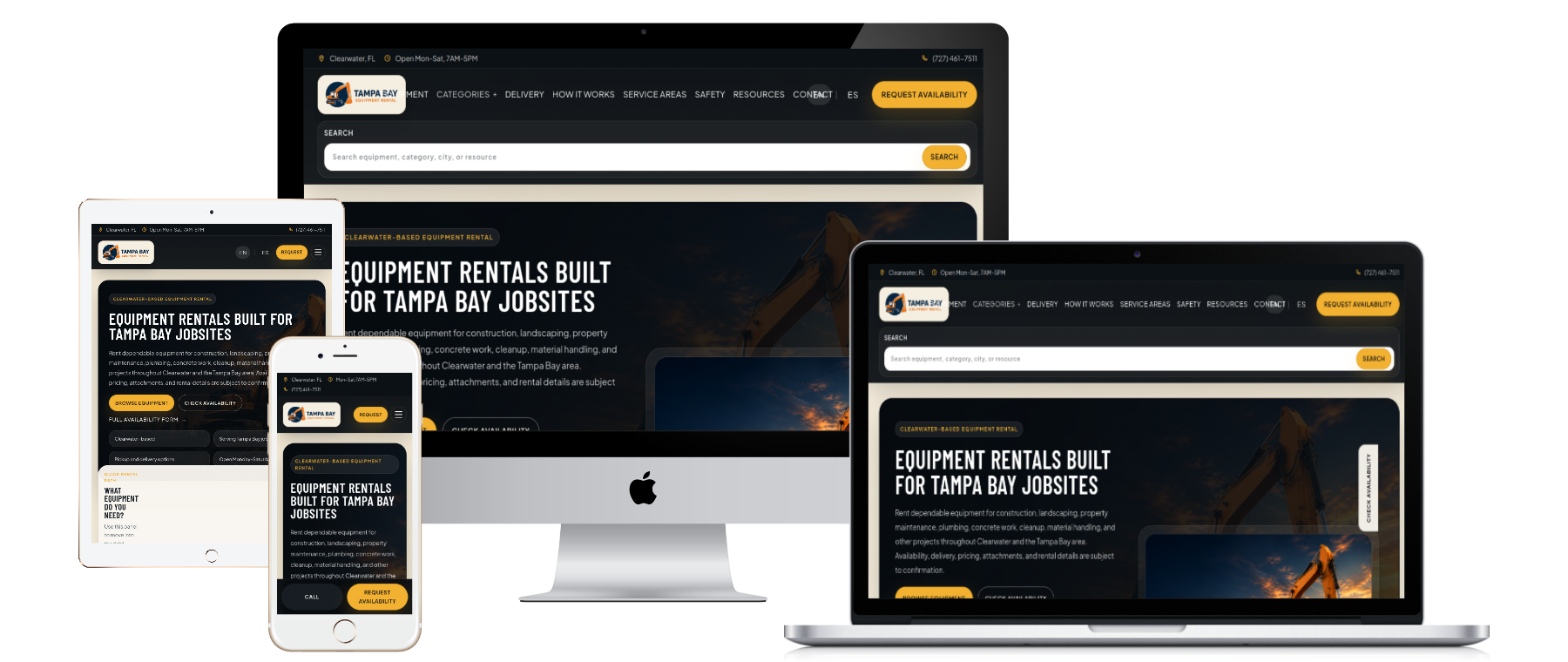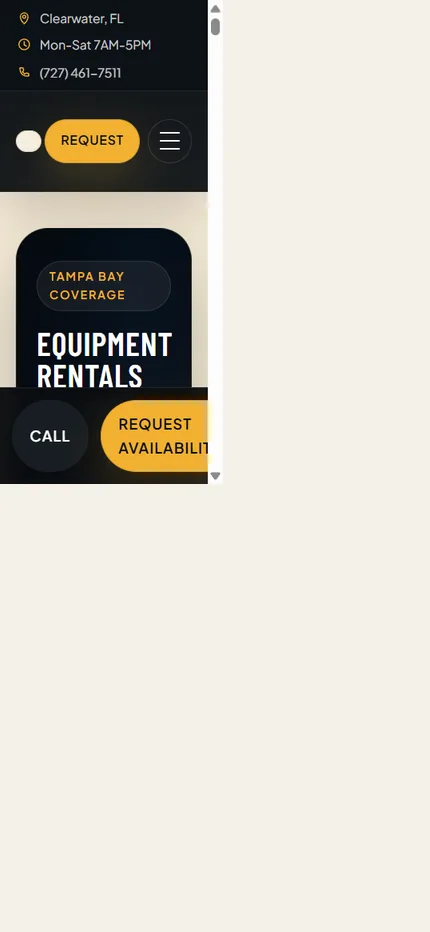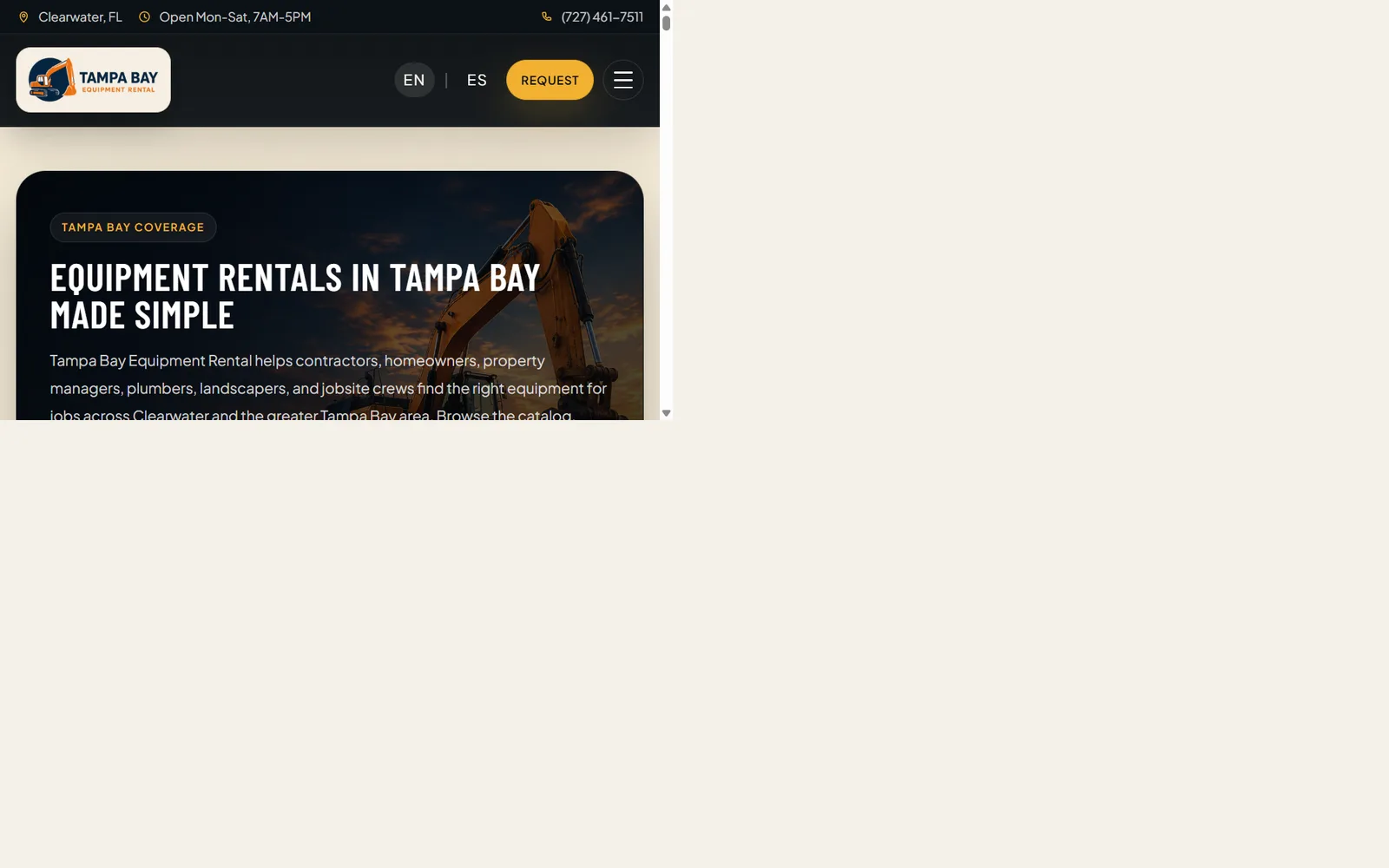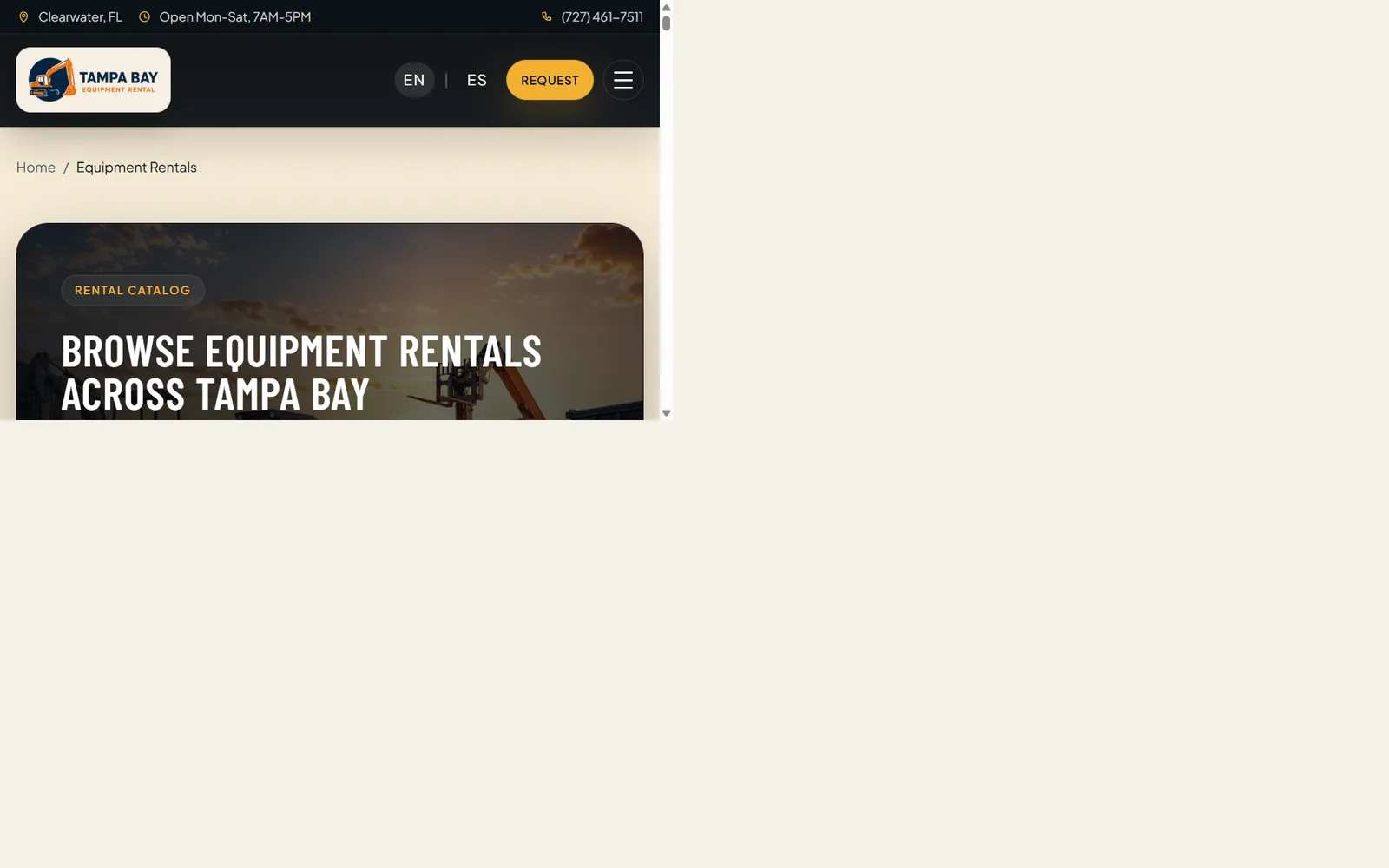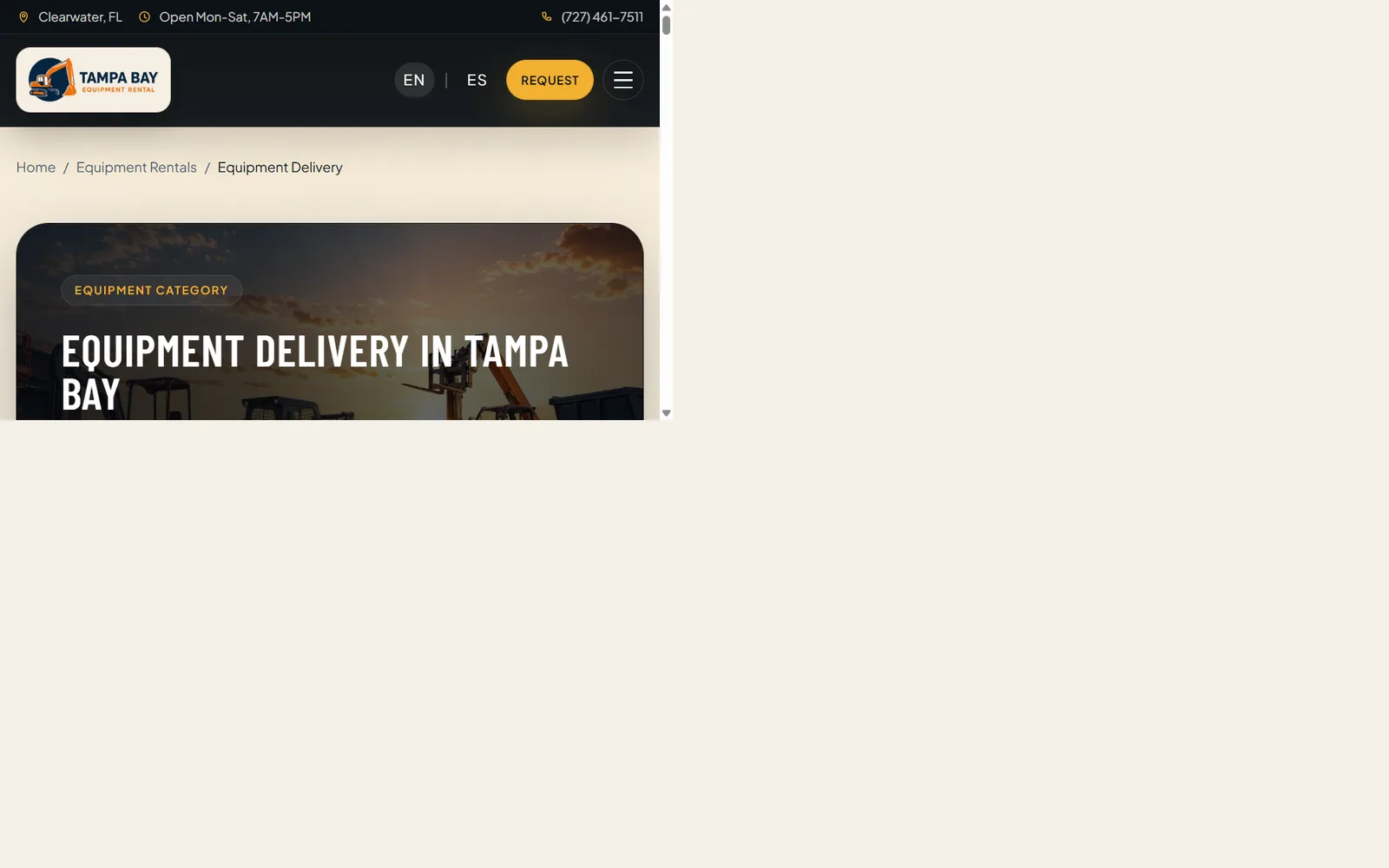

The challenge
- ●The previous website presented inconsistent company and rental information across different pages, which made it harder for visitors to trust what they were reading.
- ●The visual presentation and uneven page structure created the type of low-trust experience customers often associate with questionable websites, even though the business itself was legitimate.
- ●Equipment discovery, service-area communication, and rental-request paths were not organized well enough to guide contractors, homeowners, or property managers toward the right next step.
- ●The site needed a structure that could support an expanding catalog of machines, tools, location pages, rental resources, and lead-generation content without becoming messy again.
The Problem
The old Tampa Bay Equipment Rental website was hurting the business because it created confusion and reduced trust.
Visitors could encounter inconsistent information depending on which page they opened. The site did not present the company, equipment, rental process, service area, or policies with one clear and dependable message.
The visual design also created a credibility problem. Rather than looking like an established local equipment rental provider, the site had characteristics commonly associated with low-quality or questionable websites.
This did not mean the business itself was illegitimate. It meant the website failed to accurately represent the real company behind it.
- ●Inconsistent business information across the website
- ●Conflicting rental details and policies
- ●Uneven equipment descriptions
- ●Confusing navigation
- ●Poor visual hierarchy
- ●Unprofessional page layouts
- ●Weak trust signals
- ●Unclear rental request paths
- ●Inconsistent calls to action
- ●Limited local SEO structure
- ●Poor connections between equipment and service-area pages
- ●Content that did not consistently match customer intent
- ●A website appearance that could make the business look questionable
- ●A lack of a unified professional brand presentation
The Challenge
The project involved correcting both customer-facing credibility problems and the deeper structural issues behind them.
- ●Immediately look like a legitimate local equipment rental business.
- ●Present consistent company information across every page.
- ●Remove contradictory or outdated content.
- ●Organize a growing equipment inventory.
- ●Help visitors find equipment by machine type, project type, or rental need.
- ●Clearly explain Tampa Bay service coverage.
- ●Provide useful pickup and delivery information.
- ●Support both contractors and homeowners.
- ●Gather the right information through availability request forms.
- ●Explain that pricing and availability must be confirmed.
- ●Improve search visibility without creating thin or repetitive pages.
- ●Create a structure that could grow as more equipment was added.
- ●Replace uncertainty with a clear and professional customer journey.
Correcting the Foundation Before Redesigning the Surface
Before building the new site, the existing content and page structure needed to be reviewed for inconsistencies.
That cleanup mattered because a visually improved website would still fail if the underlying information remained inconsistent.
- ●Reviewing existing company information
- ●Identifying conflicting wording
- ●Correcting inconsistent contact information
- ●Standardizing service-area references
- ●Reviewing equipment names and categories
- ●Removing or rewriting unclear content
- ●Standardizing rental request language
- ●Clarifying availability and pricing notices
- ●Correcting internal links
- ●Consolidating duplicate or overlapping content
- ●Rebuilding the navigation structure
- ●Establishing consistent calls to action
- ●Creating a unified tone across the website
The solution
- Sun Life Tech treated the project as a credibility rebuild first, correcting content conflicts and reorganizing the information architecture before focusing on the visual redesign.
- We rebuilt the website around practical equipment discovery, clearer service-area pathways, and direct availability-request flows instead of scattered pages and conflicting messaging.
- Dedicated equipment pages, category hubs, and Tampa Bay service-area content gave the rental business room to grow without forcing every visitor through one generic catalog page.
- The redesign standardized rental notices, contact details, delivery expectations, and calls to action so customers could move through the site with a more consistent understanding of the business.
Key features
- ●A clearer homepage that establishes the business as a legitimate local equipment rental company before visitors ever reach the catalog.
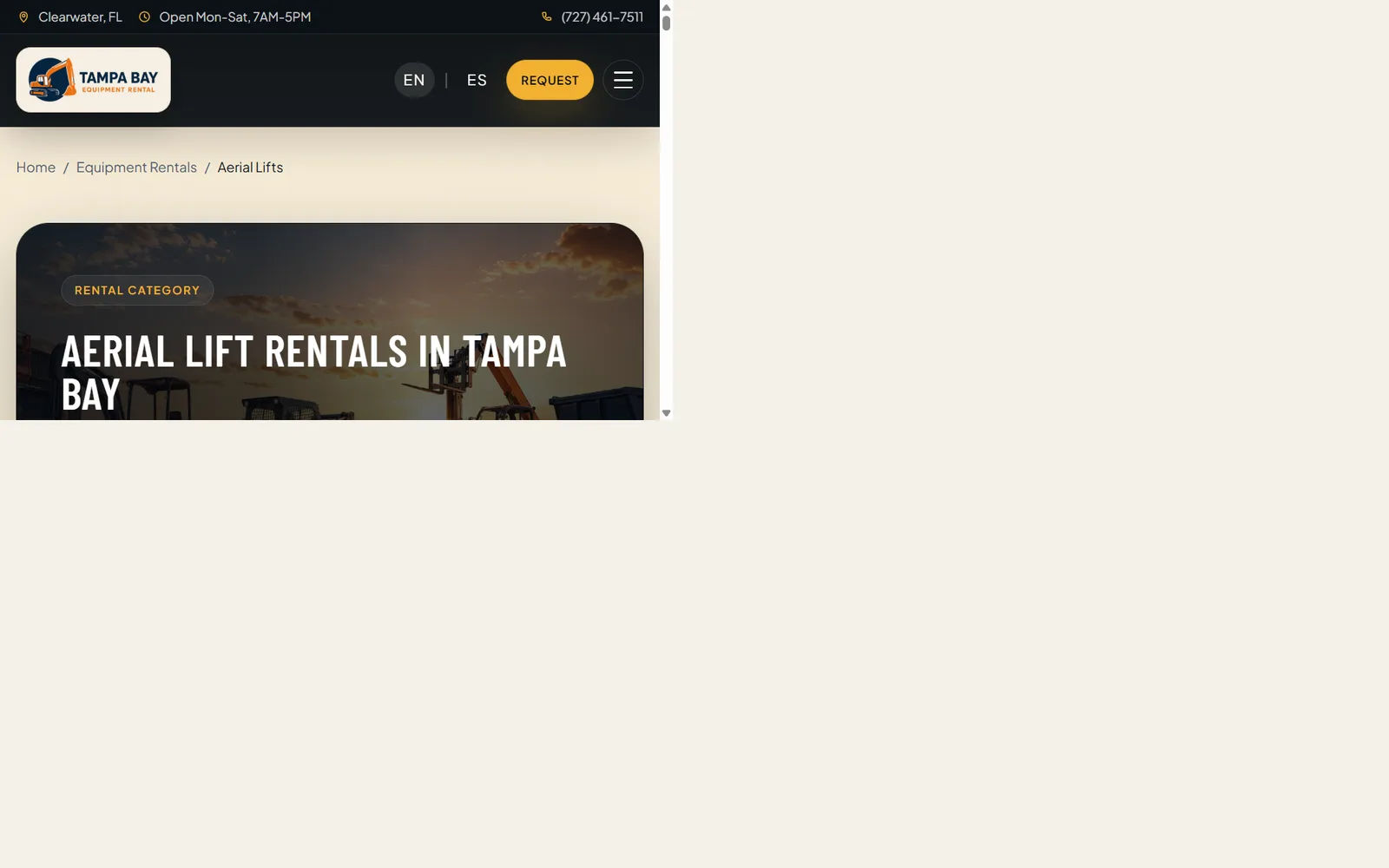
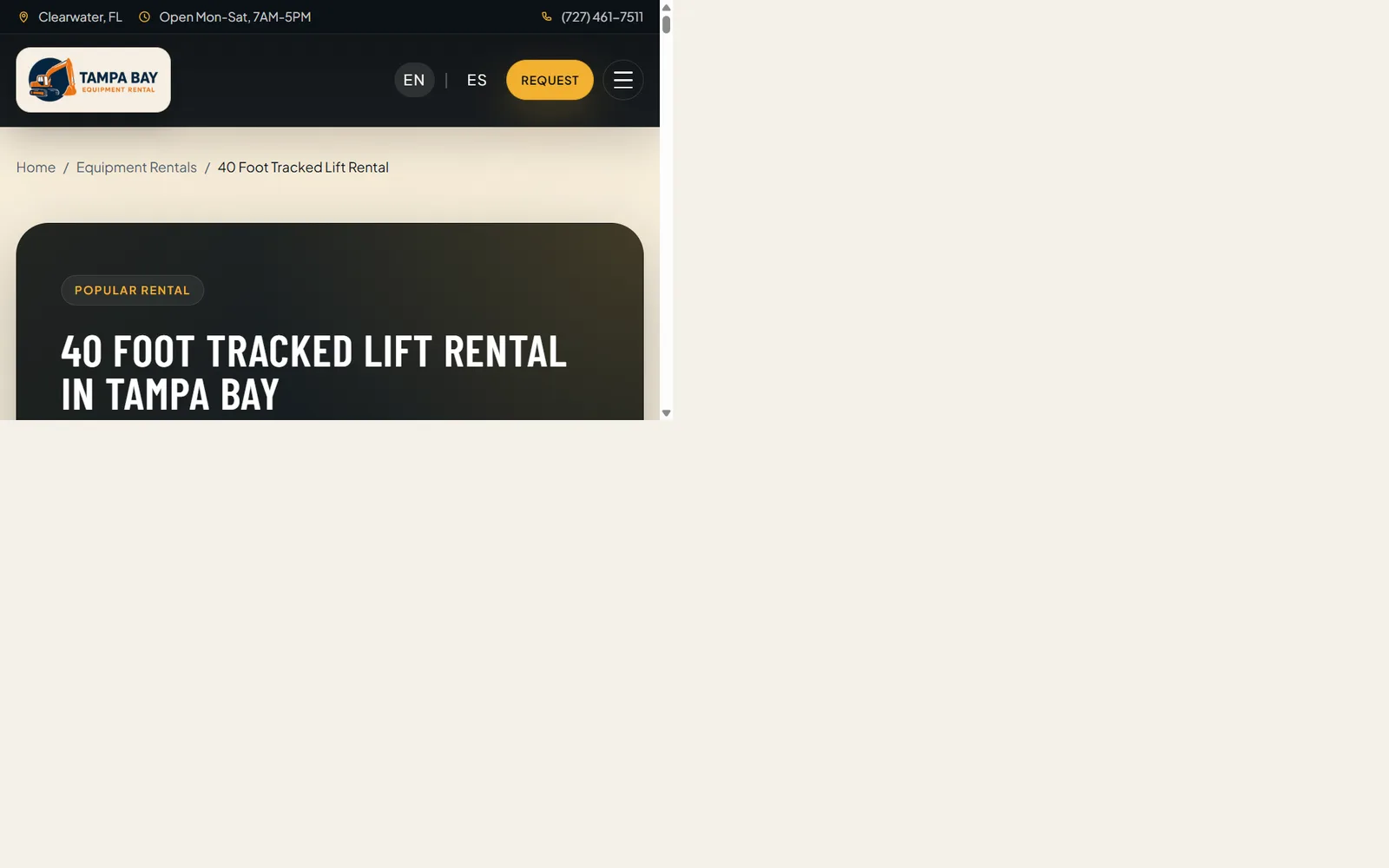
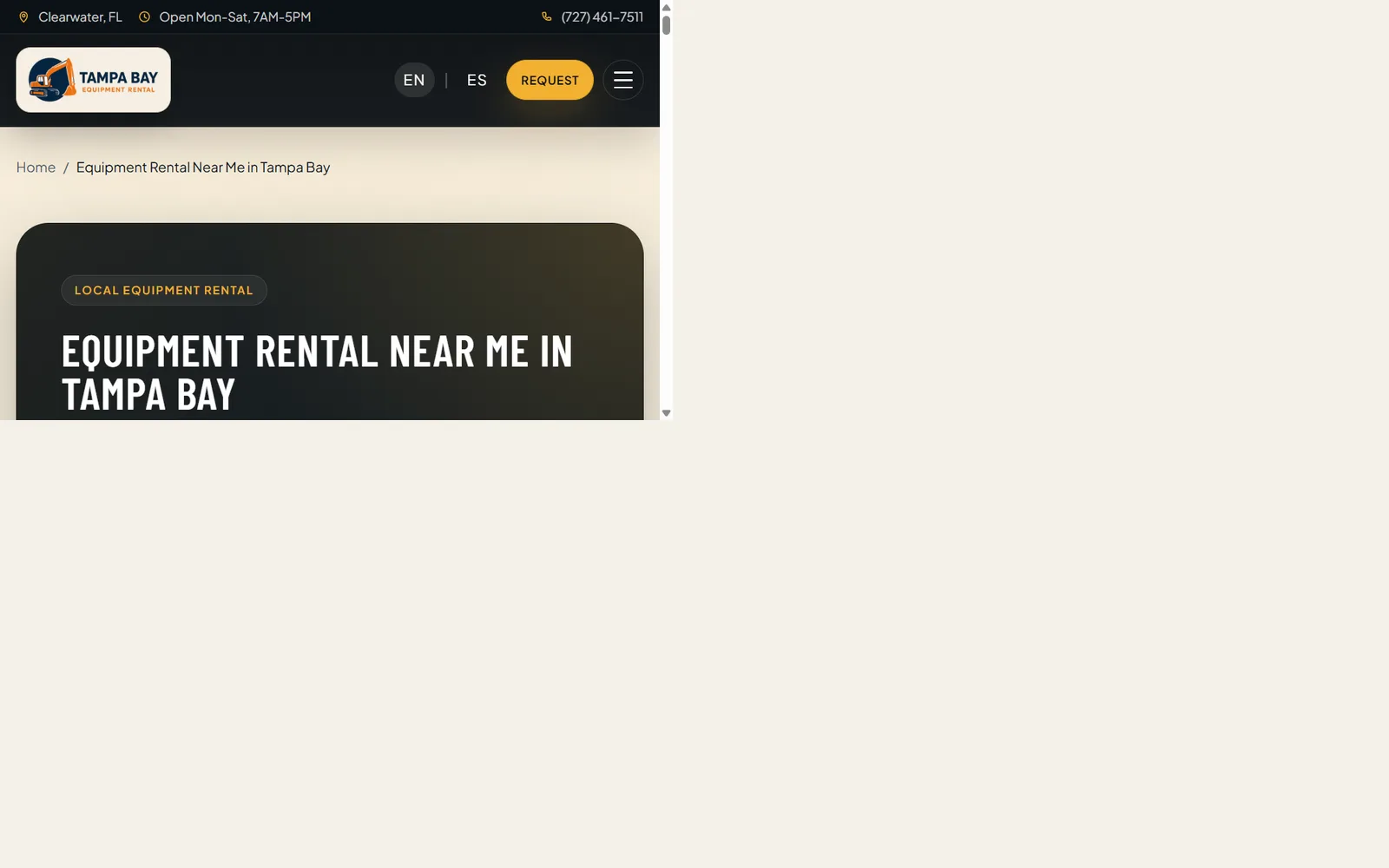
- ●Organized category, equipment, delivery, request, and near-me pages that connect search intent to practical next steps.
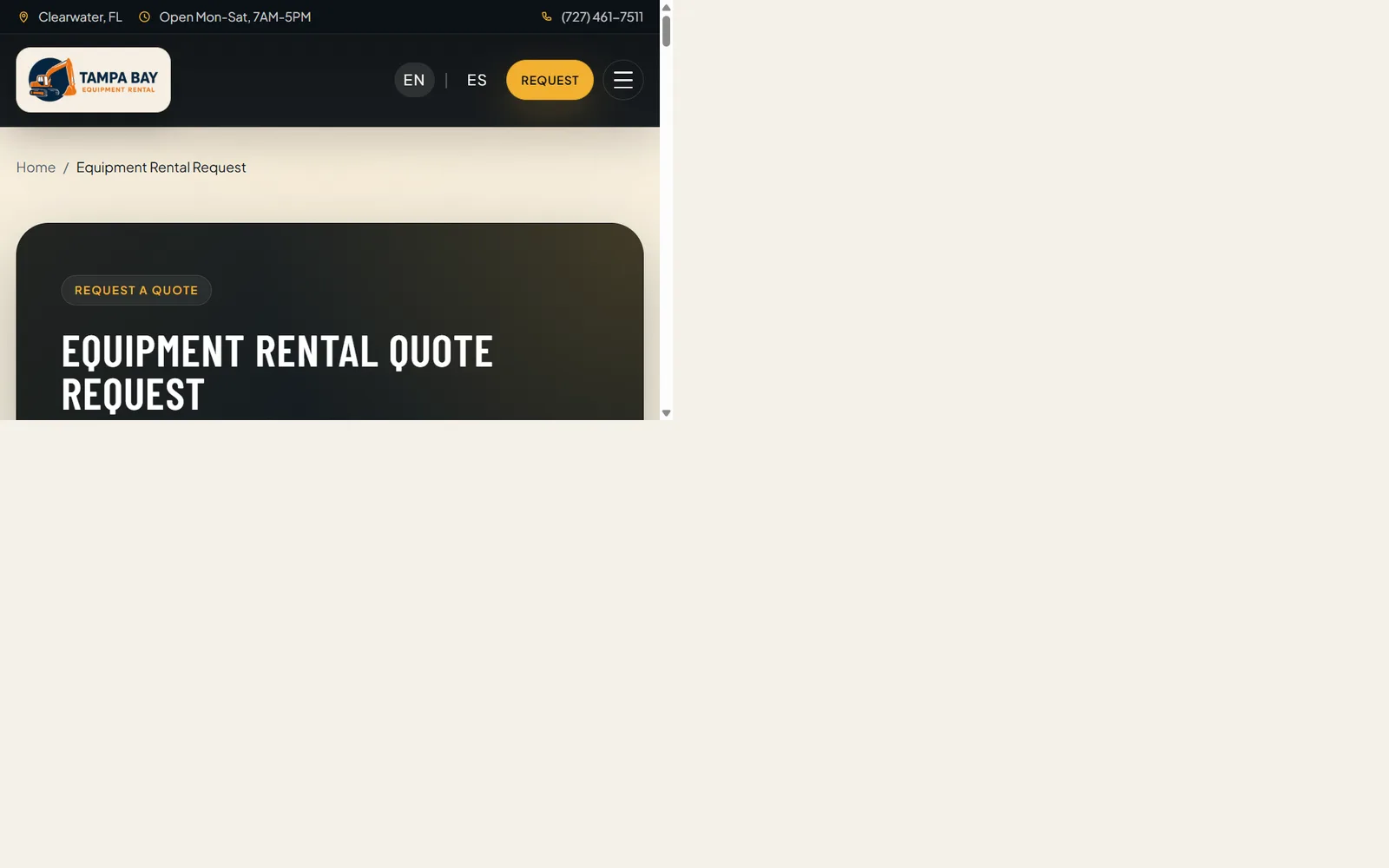
- ●Dedicated availability-request flows that gather jobsite, timing, and equipment details without implying instant checkout.
- ●A scalable local SEO structure built around equipment categories, individual machines, delivery information, and Tampa Bay service-area coverage.
Results / impact
- ●The completed website now presents Tampa Bay Equipment Rental as the legitimate and professional local business it is.
- ●Visitors can move from a broad project need to an equipment category, rental page, delivery resource, service-area page, or availability request with less friction.
- ●The new structure gives the business a stronger foundation for adding inventory, strengthening local visibility, and generating better-qualified rental inquiries over time.